
Needs vs. wants.
There’s a useful way to think about where Google fits relative to other platforms. Google is where needs get answered. Someone needs a service, they search for it, and your ad shows up. Meta works differently — it’s better suited for wants, things people might not be actively searching for but respond to when they see them.
For service businesses with high-intent buyers, Google is usually where we start. The intent is already there. Your job — and ours — is to be the answer when it matters most.
Google doesn't create demand. It captures it. That's what makes it so powerful for service businesses.
People actively searching for a solution. High intent, ready to act.
"emergency plumber near me" · "home care for mom"
People who don't know they need you yet. Awareness and discovery.
"I didn't know this existed until I saw your ad"
For most service businesses, Google is the right starting point. We’ll tell you if your situation calls for a different approach.
Families searching urgently for care solutions — high intent, emotional decision.
Roofing, HVAC, plumbing — people need help now and search first.
High-intent, high-value leads searching for specific practice areas.
Patients and families actively searching for treatment options.
Existing campaigns, tracking setup, and attribution review before spending anything.
High-intent keywords, negative keyword lists, and match type strategy for your specific market.
Campaign structure, ad groups, ad copy, extensions, and landing page setup.
Bid adjustments, search term reviews, negative keyword additions, budget pacing.
Leads, CPL, conversion rate, spend — no vanity metrics.
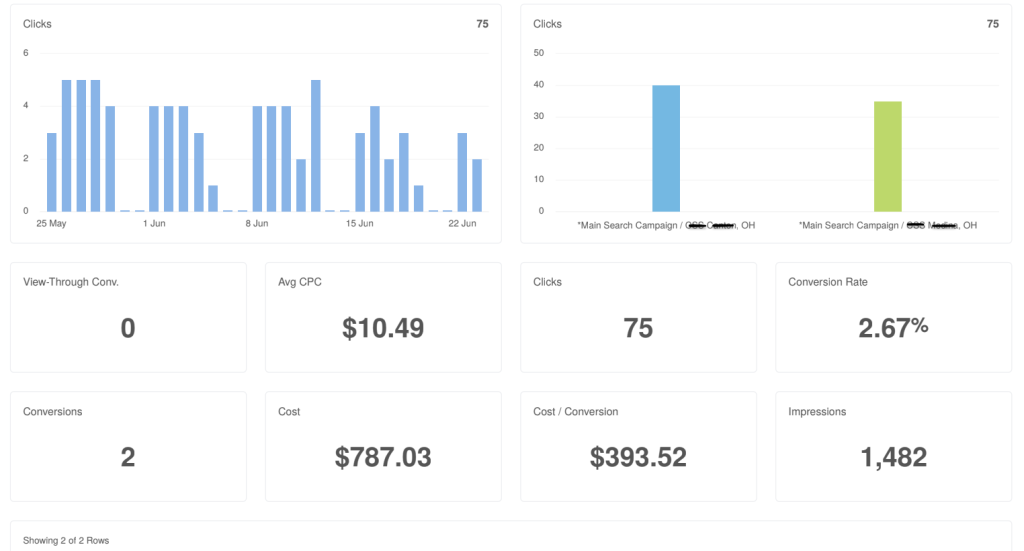
No complicated dashboards. Leads, cost per lead, spend, and what we’re doing about it. You always know exactly where things stand.
We build campaigns with the right structure, write ad copy that earns the click, and stay in your account daily to catch problems before they become expensive ones. The difference between a campaign that performs and one that doesn’t is usually found in the details — and the details require daily attention, not monthly check-ins.
Cost per lead varies by industry, market, and competition. We’ll give you an honest projection before we start, report on the metrics that actually matter, and tell you when something needs to change before you have to ask.
We also build and optimize the landing pages your ads point to. Getting the click is only half the job.
Text ads that appear when someone types a relevant query. The highest-intent format on the platform.
Image-based ads across Google's network of websites. Good for retargeting and brand awareness.
Video ads before or during YouTube content. Powerful for awareness in competitive markets.
Google's AI campaign type running across all surfaces. We use it selectively — when the account has enough data to feed it properly.
Tell us about your business. We’ll look at what’s working, what isn’t, and where there’s room to grow — no pressure, just clarity.
Or text us — we actually respond.
Google Ads Questions
There’s no fixed answer because it depends on your industry, market, and goals. Google Ads runs on an auction system, so more competitive markets and keywords cost more per click. We’ll give you an honest budget recommendation before we start and show you what a realistic cost per lead looks like for your specific situation.
Google Ads can generate leads quickly, often within the first few weeks. That said, the first month is always a learning period. The platform needs data to optimize, and we need data to make smart decisions. Results improve as we learn what your market responds to.
Search ads show up when someone types a relevant query into Google. Display ads are image-based ads that appear across websites in Google’s network. YouTube ads run before or during videos. Performance Max is Google’s AI-driven campaign type that runs across all of these surfaces simultaneously. We’ll recommend the right mix based on your goals.
Yes. We either work inside your existing account or set one up for you. We prefer clients own their own accounts so that if we ever part ways, your data and history stay with you.
We report on the metrics that actually connect to your business: leads, cost per lead, conversion rate, and spend. We don’t pad reports with impressions and click volume to make things look busier than they are.
Not always. Google works best for businesses where people are actively searching for what you offer. If your product or service is something people don’t know to search for yet, Meta or programmatic might be a better starting point. We’ll tell you honestly which makes more sense before you spend anything.